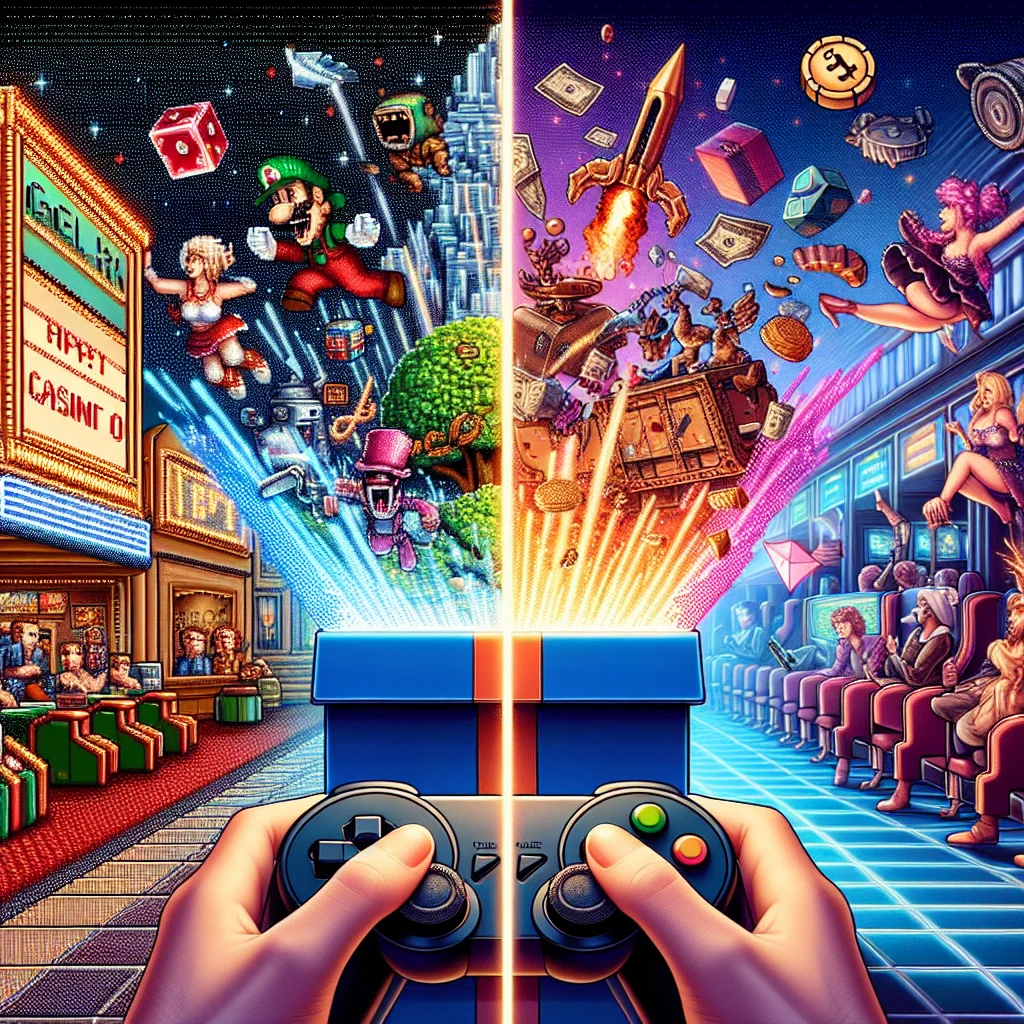
Loading the Dice: From Pixelated Poker to Virtual Vegas
The intersection of gambling and video games is as old as the medium itself, evolving from simple representations to deeply embedded, and often controversial, economic systems. Early games featured casino-style mini-games as side attractions, like the poker and blackjack found in “Red Dead Redemption” or the iconic “Casino” area in “Fallout: New Vegas.” These were straightforward digital translations of real-world gambling, offering in-game currency rewards. However, the relationship has grown infinitely more complex. Modern video games don’t just contain gambling; they often are structured around gambling-like mechanics, leveraging the same psychological triggers—anticipation, variable rewards, and the “near-miss” effect—to enhance engagement, sometimes blurring the line between play and pay-to-win exploitation.
The Loot Box Controversy: Gacha, Grind, and Psychology
At the heart of the contemporary debate is the “loot box”: a virtual container purchased with real money or in-game currency that rewards random items of varying rarity. This model, directly descended from Japanese “gacha” games and trading card packs, employs a classic variable ratio reinforcement schedule—the same principle that makes slot machines addictive. Players do not know what they will get, but the possibility of a rare, high-value “pull” drives repeated purchases. The presentation is crucial: dramatic opening animations, sparkling visual effects, and suspenseful audio build anticipation, mirroring the sensory overload of a casino.
Critics argue that this constitutes unregulated gambling, particularly when the contents can be traded for real money on secondary markets, as seen in games like “Counter-Strike: Global Offensive.” Regulatory bodies worldwide have begun to intervene, with some countries classifying certain loot box systems as gambling. Game developers and publishers counter that they are simply “surprise mechanics,” comparing them to collectible toys. The ethical dilemma lies in their prevalence in games marketed to minors and the obfuscation of real-world costs, creating an environment where players, especially young ones, can develop problematic spending habits in pursuit of digital rewards with perceived social or competitive value.
RPGs and the Dice of Destiny: Core Gameplay as Gambit
Long before microtransactions, role-playing games (RPGs) baked gambling into their core mechanics. Digital adaptations of tabletop games like “Dungeons & Dragons” are fundamentally reliant on random number generators (RNG) to simulate dice rolls for attacks, skill checks, and loot drops. Every battle is a gamble: will your attack hit or be a critical miss? Will the defeated monster drop a legendary sword or common trash? This inherent randomness creates thrilling tension and replayability. The “grind”—repeating tasks for a chance at rare loot—is a voluntary gamble of time for potential reward.
Games like the “Diablo” or “Borderlands” series are built on this “loot hunt” principle, where the core gameplay loop is a continuous gamble on the quality of your next equipment drop. The psychological payoff of finally receiving a coveted item after hours of play is immense, directly mirroring the gambler’s high. This form of in-game gambling is generally accepted because the currency wagered is player time and effort, not direct real-world money (though it can be monetized through “time-saver” microtransactions). It uses chance to create narrative unpredictability and a sense of earned fortune, making success feel both skillful and lucky.
Virtual Economies and High-Stakes Trading: The Steam Market
Platforms like the Steam Community Market have created legitimate, billion-dollar virtual economies where gambling-adjacent activities thrive. Players can buy, sell, and trade in-game items—often from loot boxes—with real currency. This has given rise to third-party “skin betting” sites where players can wager these cosmetic items on professional esports matches or casino-style games. These sites, largely unregulated, have faced significant legal scrutiny for facilitating underage gambling, as the items have clear monetary value. The abstraction of money into colorful “skins” can desensitize players, particularly younger ones, to the real financial stakes involved.
Furthermore, games like “Team Fortress 2” or “Dota 2” have entire economies based on item rarity, with some virtual hats or weapons selling for thousands of dollars. This creates a speculative investment market, where players “bet” on the future value of digital goods. The line between gaming, collecting, and financial speculation becomes dangerously thin. These systems replicate the thrill of high-risk trading and gambling, but within a walled garden that lacks the consumer protections of traditional financial or gambling institutions, posing unique challenges for regulators and parents.
Simulation, Satire, and Critical Play: Games About Gambling
Amidst the controversy, some games use gambling mechanics for deliberate artistic or critical purposes. “The Castle of My Skin” is an experimental game using tarot and chance to explore identity. “Card Shark” is a narrative game about cheating at cards in 18th-century France, teaching the player real sleight-of-hand techniques within a critical historical context. These games engage with gambling as a theme or mechanic to tell a story or make a point, rather than to monetize player psychology.
Satirical games like “The Stanley Parable” or “The Beginner’s Guide” often include meta-commentary on game design itself, sometimes parodying addictive reward loops. Even major titles like “Cyberpunk 2077” include in-game arcades with gambling machines that serve as world-building, depicting a dystopian society numbed by cheap thrills. These examples show that video games, as a mature medium, are capable of reflective and critical engagement with gambling, examining its cultural role and psychological hooks rather than uncritically exploiting them. The future of this digital relationship hinges on the industry’s ability to differentiate between ethical engagement and predatory design, ensuring that the game remains fun, not a financial trap.