The House Always Wins: Noir’s Bleak Bet on Existence
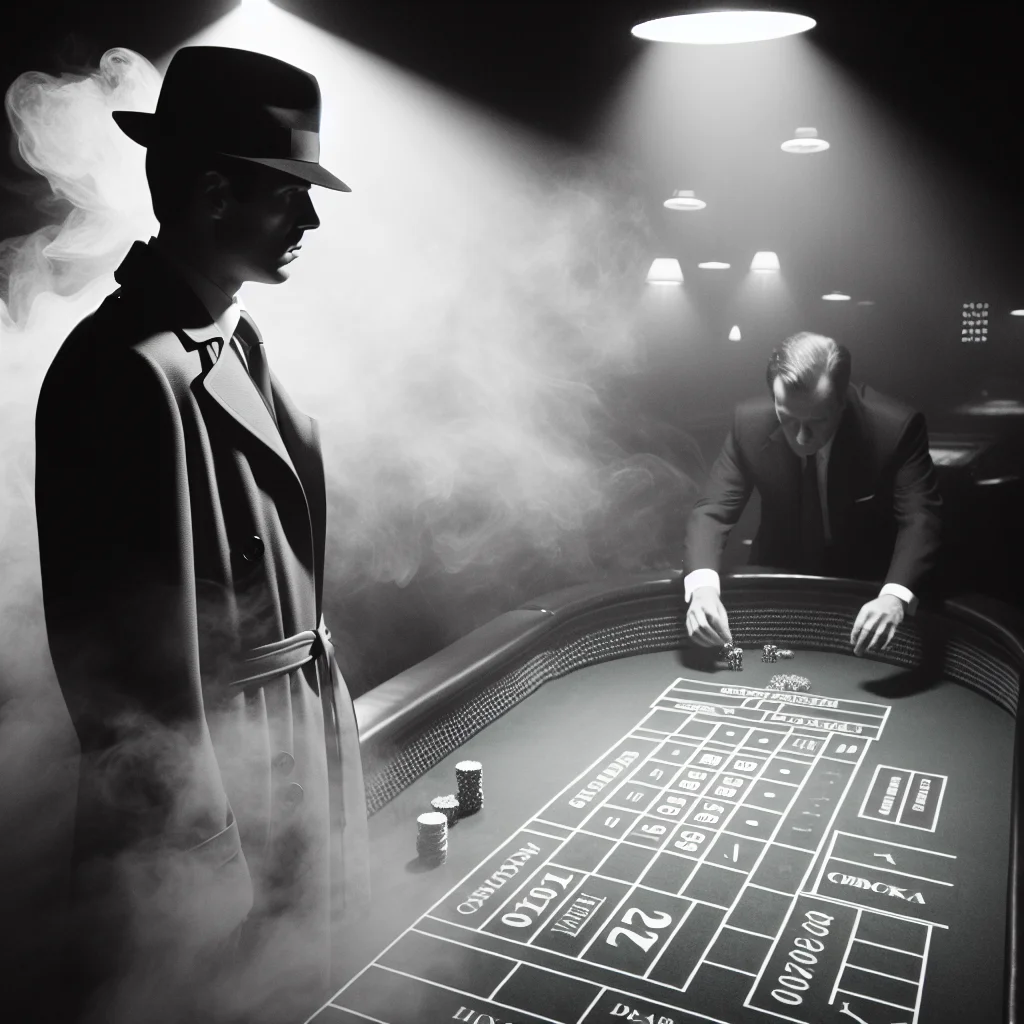
In the shadow-drenched world of film noir, gambling is never merely a recreational activity. It is a fundamental condition, a philosophical stance, and a visual shorthand for a universe governed by cruel chance and rigged systems. Emerging in post-World War II America, noir used the iconography of the casino, the racetrack, and the backroom poker game to articulate a deep-seated anxiety about fate, masculinity, and the crumbling American dream. The noir protagonist doesn’t just visit a gambling den; he inhabits a world that is one vast, unforgiving casino, where every choice is a long-shot bet and the price of loss is often more than money—it’s one’s soul, sanity, or life. This cinematic language transformed gambling from a plot device into the central metaphor for a cynical, disorienting age.
The Tarnished Knight at the Table: Masculinity Under Pressure
The classic noir hero—the private eye, the down-on-his-luck vet, the tempted everyman—is often a gambler by nature, if not by profession. His masculinity is defined by a cool, stoic willingness to face down risk. In “The Maltese Falcon,” Sam Spade plays a dangerous game of bluff with multiple criminals, gambling with information and lives rather than chips. The card table becomes an extension of his office, a place where psychological warfare is waged. Similarly, in “Out of the Past,” Jeff Bailey’s entire tragic arc is the result of a past gamble: his decision to get involved with the gangster’s girlfriend, Kathy. His life is a settled debt from a bet he lost long ago.
These men frequent gambling establishments not for pleasure, but because they are natural habitats. The smoky, confined spaces of off-track betting offices or illegal casinos mirror their own trapped circumstances. Gambling tests their control; a true noir hero might lose his money, but he must never lose his “cool.” The moment he becomes emotionally invested in the outcome—like Dixon Steele’s rage at a fixed horse race in “In a Lonely Place”—he reveals a vulnerability that the corrupt world will exploit. For noir, the ability to gamble dispassionately is the last bastion of a threatened masculine code, a way to assert agency in a system designed to strip it away.
The Femme Fatale’s Loaded Dice: Sex as the Ultimate Wager
If the noir hero is the gambler, the femme fatale is often the game itself—alluring, deceptive, and ultimately ruinous. She represents the highest-stakes bet a man can make. Investing in her promises of love or partnership is portrayed as a catastrophic gamble against overwhelming odds. In “Gilda,” the title character is literally introduced with a song about gambling (“Put the Blame on Mame”), and her volatile relationship with Johnny Farrell is a continuous power struggle, a high-stakes poker game where the chips are emotional dominance and survival.
The femme fatale understands the rules of this world intimately. She uses her sexuality as capital, placing her own bets on malleable men. When the hero becomes involved with her, he is not entering a romance but sitting down at a rigged table. The sexual tension in noir is often framed with gambling imagery: lingering shots on her hands (dealers’ hands), the exchange of meaningful looks across a crowded casino, the promise of a “sure thing” that is anything but. Her betrayal is the equivalent of the dealer revealing a hidden card—it was always part of the game. This dynamic frames romantic entanglement as the most dangerous gamble of all, one where the payout is death or despair, cementing noir’s profoundly pessimistic view of human connection.
Visual Grammar of Risk: Chiaroscuro and the Unseen Hand
The visual style of film noir is perfectly suited to the theme of gambling. The high-contrast chiaroscuro lighting—slashes of light piercing deep, inky shadows—creates a world of stark binaries: win/lose, live/die, know/guess. The gambling den is a masterpiece of this aesthetic: the pool of light on the green felt table, the faces of players half in darkness, the smoke that obscures and diffuses. This lighting visually represents chance itself; what lies in the shadows is unknown, a risk. The camera often adopts the gambler’s subjective, paranoid point-of-view, peering through stair railings or door cracks, suggesting that someone is always watching, that the game is never fair.
Compositionally, characters are frequently framed within tight, confining spaces—behind bars of shadow, trapped in phone booths, or cornered in alleys—mirroring the feeling of having one’s back against the wall, of making a desperate final bet. The use of oblique, Dutch angles during moments of tension further disorients the viewer, making the world itself feel crooked, off-balance, like a tilted roulette wheel. Even the relentless, often rain-slicked streets of noir cities reflect the shimmering, uncertain promise of the casino, a labyrinth where every turn is a gamble. The environment itself becomes a croupier, dealing out fatalistic scenarios.
The Fixed Game: Noir’s Critique of the American System
Ultimately, film noir uses gambling to express a profound distrust of post-war American institutions. The “house” in these films is not just a casino; it is the police force on the take, the corrupt corporation, the entire social order that promises prosperity but delivers only stacked decks. Movies like “The Killing” (Stanley Kubrick’s precise heist film) or “The Asphalt Jungle” meticulously plan a score as the one fair gamble in a rigged system, only to see it unravel due to human frailty and, inevitably, bad luck. The heist is a bet against the house of society itself.
This is most explicit in films centered on gambling, like “The Cincinnati Kid,” where the young poker prodigy learns that talent alone cannot beat the entrenched, cynical power of the old guard. The final, legendary hand is less about cards and more about a crushing philosophical lesson. Noir suggests that the dream of pulling oneself up by the bootstraps is a sucker’s bet. In this world, the only certainty is that the game is fixed, and the true noir tragedy is the moment the protagonist realizes he was never a player—he was the stake. This bleak, yet compelling, vision cemented gambling as one of noir’s most enduring and powerful symbols, a reminder that in the dark alley of fate, everyone is playing against the odds.